
Protect: Network Hardening & Segmentation
IACS UR E26 Control 4.2: Network Zoning & Conduit Enforcement
Building the maritime digital fortress. This phase implements the technical safeguards identified in the CSDD. From air-gapping administrative systems to enforcing deep-packet inspection on engine room conduits, these playbooks define the hardening standards for modern vessels.
Protection in maritime OT — where compliance meets engineering
The Protect phase is where security decisions become physical reality on the vessel. Network segmentation is not a policy — it is a VLAN configuration on a managed switch, a firewall rule set, a locked cabinet door, and a tested procedure for what happens when a vendor needs temporary remote access. The gap between a vessel that has documented its intent to segment and a vessel that has actually segmented is the gap between a paper compliance programme and one that would survive a real incident.
Maritime OT protection has constraints that shore-side IT security does not. Legacy systems running Windows XP cannot be patched. PLCs cannot run endpoint protection agents. A firewall between the bridge and the engine room network cannot be configured in a way that interrupts alarm transmission. Every protective control has to be evaluated against the operational environment it sits in — and the playbooks in this phase are built around that constraint, covering what is achievable with the equipment found on real vessels rather than what would be ideal in a greenfield environment.
Protection is also the phase most visible to surveyors, vetting inspectors, and P&I clubs. A SIRE 2 inspector will ask to see network diagrams showing IT/OT separation. A Class surveyor will ask for evidence that USB media is controlled and that remote access is logged. A P&I club assessing incident liability will look for evidence that access controls were in place and enforced. The five pillars below cover all of these areas — for vessels of any type, at any stage of their cyber security programme.
Successful protection relies on the “Purdue Model” adapted for maritime use. We define Zones (groups of assets with similar security needs) and Conduits (controlled pathways for data). This model prevents a breach on the Crew Wi-Fi from reaching the Navigation Bridge.
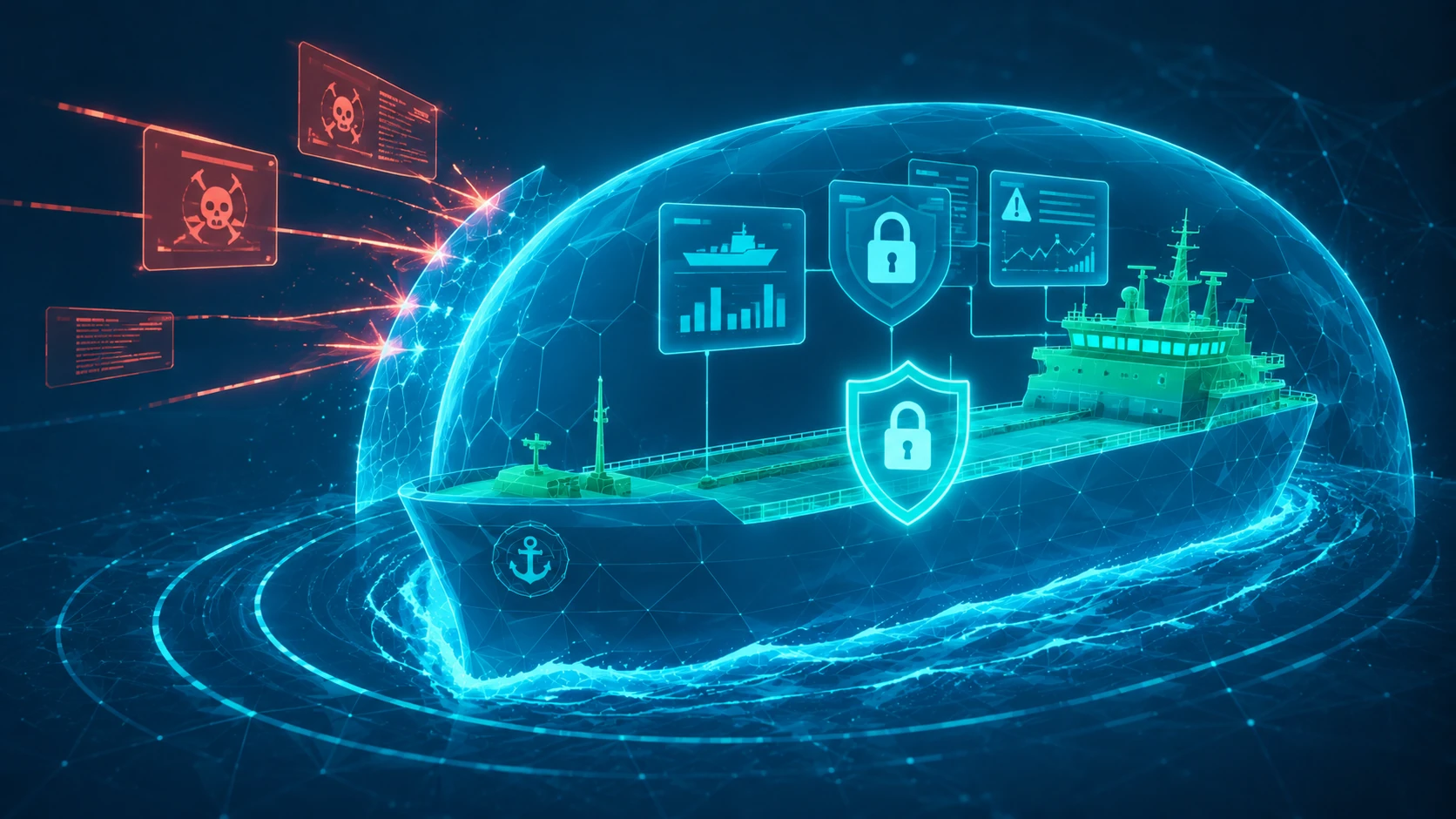
Reference: IACS UR E26 Segmentation Architecture (Category I, II, III Isolation)
Network Control
Implementing boundaries between IT and OT as mandated by UR E26 §4.2.
Access & Identity
Standards for MFA, RBAC, and secure vendor pipelines for critical systems.
Endpoint Hardening
Securing physical assets and locking down OS services on legacy hardware.
Software & Data Integrity
Ensuring code and firmware remains untampered with and properly versioned.
Environmental & Power
Ensuring the physical “Secure Space” and power continuity for critical OT security infrastructure.
Technical Audit Tip:
Per your 3-Zone model, surveyors expect to see Physical Isolation or 802.1Q VLAN Tagging. Be prepared to show your Firewall ACL list to prove there are no “Any/Any” rules between the Bridge and Crew networks.
For onboard CBS network risk — covering zone/conduit architecture, VLAN segmentation adequacy, vendor scope boundaries, and physical access controls per E26 §3.2 — map your topology and get an instant E26/E27 compliance assessment with clause references and mitigation measures.
Open CBS Risk Assessor →