
ZTNA and iDMZ—The Gold Standard for OT Remote Access
This guide explains the Zero Trust Network Access and Industrial DMZ architecture — the gold standard for brokering remote OEM access to OT environments without creating permanent connections to untrusted networks.
In the maritime world, enabling remote access to critical Operational Technology (OT) networks is essential for maintenance. However, directly exposing these systems to the internet is an unacceptable risk.
The Challenge: Why VPNs & Jump Hosts Fail OT
Traditional “Secure” methods actually increase the vessel’s attack surface in two specific ways:
The “Full-Tunnel” Risk
Standard VPNs grant Layer 3 access. Once an OEM connects, their laptop is “virtually” inside the ship. If that laptop is infected, the malware can scan and attack every PLC on the subnet via Lateral Movement.
The “Jump Host” Vulnerability
Maintaining a Windows Jump Host in the iDMZ requires constant patching. If left unpatched, it becomes a Permanent Beachhead for hackers to sit and wait for the right moment to pivot into the engine control system.
Before migrating away from RDP, it is worth documenting your current exposure — the CBS Risk Assessor flags RDP connections on OT segments against E27 §4.2 and maps the affected components, giving you a baseline to present to the class surveyor once ZTNA is deployed.
The Zero Trust Solution: Access is granted to the Service/Application (e.g., HMI Web Port 443), not the network. The user never “sees” the IP address of the PLC.
The Solution: ZTNA in the iDMZ
An iDMZ (Industrial DMZ) acts as a neutral buffer zone. Critically, it serves as the secure environment for the ZTNA Gateway.
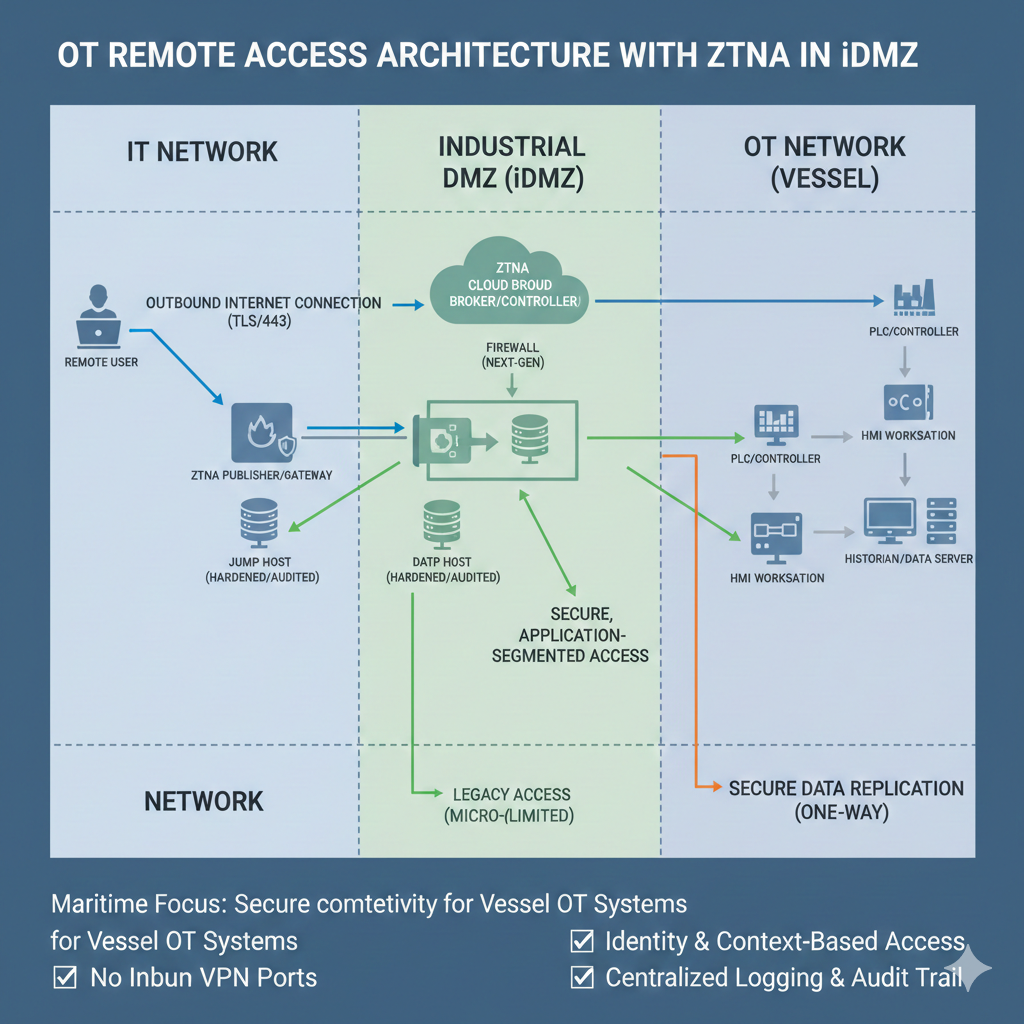
Fig 2.1: ZTNA Gateway Architecture for Multi-Vendor OT Environments.
The ZTNA Connection Flow
Unlike a VPN, which opens a “door” into your network and then asks for a key, ZTNA keeps the door hidden behind a brick wall. The connection is only “stitched” together once identity and health are proven.
The Cloud Broker verifies the OEM’s identity via MFA. Simultaneously, it performs a Device Health Check. If the engineer’s laptop has a disabled firewall or an active virus, the broker kills the request before it even reaches the ship’s satellite link.
Standard firewalls have “Inbound Listeners” that hackers can scan. The onboard ZTNA Gateway uses Inside-Out Connectivity. It reaches out to the broker to “pick up” the authenticated user. To the rest of the internet, the vessel appears to have no open ports—it is effectively invisible.
Instead of joining the network (Layer 3), the user is bridged to a specific Application Socket (Layer 7). If they are authorized for the “CCTV HMI,” they cannot “see” the Engine Control System, even if it’s on the same physical switch.
Key takeaway: By using Step 3, you eliminate the risk of an OEM’s “dirty” laptop spreading a worm across the ship’s internal OT network.
Architecture is not the same as process. The three steps above stop an OEM from ever seeing an exposed IP or reaching beyond their authorized application — but IACS UR E26 §4.2.6 also requires that no session, ZTNA or otherwise, can begin until a responsible role on board has explicitly accepted it, and that every session is logged and terminable from the vessel side. That workflow — the Service Entry Permit, onboard acceptance step, and session logging — is covered in the On-Demand Access Control & Logging playbook, and sits on top of whichever gateway architecture is deployed.
Firewall and Policy Configuration
To implement this, the firewall must be configured with a “Default Deny” posture. Use the following logic to configure the iDMZ conduits:
The Advantages of ZTNA 2.0 in the iDMZ
Access is not just granted once; the ZTNA system continuously verifies identity and device health throughout the session.
Hardened, purpose-built appliance. Drastically reduces the patching burden compared to a general-purpose Windows/Linux server.
Policies are enforced based on identity and application, allowing multi-vendor access without complex firewall rules.
Implementing the iDMZ with ZTNA maintains the absolute security and integrity of a vessel’s critical operational systems.
The specific regulatory requirements this playbook satisfies. Use these references when preparing for Class survey or responding to a surveyor's checklist.